



The Premier League’s Profit and Sustainability rules are impacting clubs and their ability to spend in the summer transfer market.
With the boom of football finance in England, the Premier League introduced measures to ensure clubs couldn’t simply spend their way to the top.
The first iteration of these guidelines, Financial Fair Play, was adapted into the newer Profit and Sustainability Rules (PSR).
Those were introduced in 2013, but fast forward over ten years into the future and the regulations are having an impact.
Everton and Nottingham Forest were handed point deductions over the 2023/24 season, due to a breach of these rules.
Then there’s the activity in the transfer market which has been influenced by PSR, including how Tottenham operate in the window.
So with that said, here’s a look at everything you need to know about the Premier League’s Profit and Sustainability Rules (PSR) and how it impacts Spurs.

What are the Premier League PSR rules?
The current iteration of the Premier League’s PSR guidelines states that a club can only make a loss of up to £105million over a three-year accountancy period.
That works out to roughly £35million-per-year, though the reality is that any ownership has to foot most of that loss.
Profit and loss are worked out as revenue minus costs, which has led to clubs finding ways to increase their revenue streams to better compete with their rivals – something Daniel Levy has worked hard on at Tottenham.
What is amortisation?
Amortisation is how player value depreciates over the length of their contract on the football club’s balance sheet.
For every year they are contracted – up to a maximum of five years – their value lowers in increments.
For example, if a player was bought for £5million on a five-year contract, then each year they would lose £1million in value on the books until they were £0 or a free transfer.
Chelsea were able to stagger their losses during a large spend in the Todd Boehly era by offering longer contracts – though this was stopped by introducing a maximum of five years on any contract depreciation.
Any player sold above their amortisation value – regardless of their initial transfer fee – could be written down as profit in the accounts.
When is the Premier League’s PSR deadline?
The current deadline for the Premier League’s accountancy year is June 30th, which then kickstarts a fresh year of being able to spend.
It’s why some clubs may be forced to sell in the transfer market before this date, while others may only be able to start spending afterwards.
- READ MORE: Tottenham confirmed signings, transfer ins and outs, loans and releases for 2024 summer window

Which costs aren’t involved in PSR?
While there are a lot of different factors involved in the current iteration of PSR, there are some factors that don’t influence the state of play for each club.
Infrastructure spending, such as improvements to the training ground or stadium, doesn’t come under the calculations.
Neither does the running of the youth development team or the women’s team, meaning the impact solely lies with the men’s first team.
Charity and community work don’t factor into PSR either.
How are Tottenham impacted by PSR?
Tottenham are amongst the top six generators of revenue in the Premier League, which gives them an advantage with how much they can spend.
However, in comparison to the likes of Manchester United and Manchester City, Spurs are still some way behind.
Daniel Levy has been looking to close that gap by raising the income through several different ways.
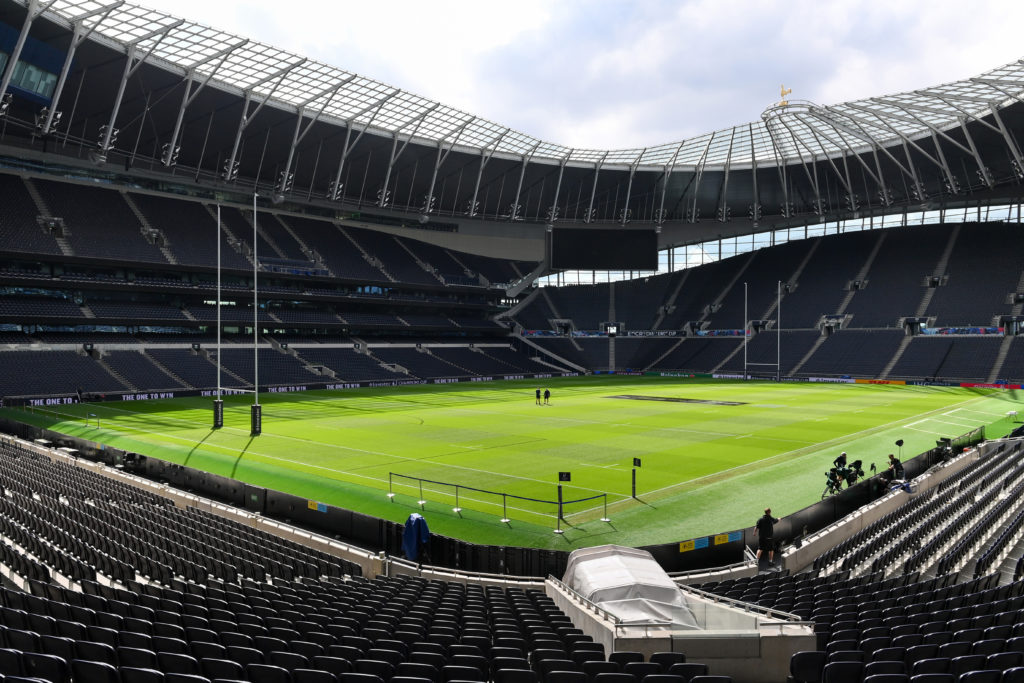
The main one has been the building of the Tottenham Hotspur Stadium, which cost in the region of £1.2billion to make.
While it is an upgrade on White Hart Lane in terms of capacity – allowing for more fans to buy tickets to make more income – better facilities also encourage more matchday spending.
The club’s revenue isn’t wholly relying on the home matches though, with the hosting of events at the stadium also generating income.
Concerts and performances that are hosted by Spurs give them a cut of the profit, on top of any merchandising and food or drink.
There are other sporting events such as Rugby and NFL hosted by the club, while other experiences such as the Dare Skywalk and F1 Drive also create money-making opportunities.
A club-record revenue of £550million shows promising signs of being able to scale up the cost of the squad in the long term for Ange Postecoglou.
UEFA financial rules
While Tottenham must comply with the Premier League’s financial rules, they also have to fit in with UEFA’s own rules for their continental competitions.
With Spurs set to compete in the Europa League next season, as well as the Champions League beyond that, those rules are important to abide by.
They are being phased in over the next few seasons but will entail clubs spending 70% of their turnover on wages.
The current season requires clubs to spend a maximum of 80% on their wages-to-turnover ratio.
Premier League squad cost control
The Premier League are continually looking at ways to improve the current system in place, intending to control spiralling costs in the division.
One idea that is being trialled on a shadow basis – not fully implemented – is the idea of a squad cost control system.
This would be similar to UEFA’s current way of working, which is on a wages-to-turnover cap and ensuring that it doesn’t exceed a threshold.
The current trial is set at 85% for the coming season, though this is simply being trialled in the background to test whether it would work or not.
Clubs aren’t expected to match these rules, with it simply being a test for potential implementation in the future.
Receive a digest of our best Spurs content each week direct to your mailbox


